
Exposure Management

Internal and External Vulnerability Assessments

Validate your exposure from both sides of the perimeter — what the internet sees, and what an insider could reach.

Two spatial volumes meeting at a refined boundary, representing internal and external exposure in one view

The Open Security Experience

Where this service sits.

Discover → Validate → See & act → Improve. This engagement lights the stages that match how Open Security delivers it — and stays connected to the rest of the experience.

  1. 01DiscoverSee where risk lives.
  2. 02ValidateProve what actually works.
  3. 03See & actPrioritize and close it.
  4. 04ImproveGet stronger next cycle.

The problem

Half a picture is not a posture.

External-only assessments miss lateral movement paths; internal-only views miss what the internet already knows about you. Attackers use both — your assessment should too.

  • Two vendors, two reports, and no single ranked plan for what to fix first.

  • Perimeter findings never get walked internally, so the real path stays theoretical.

  • The next assessment cannot measure progress because last time’s inventory did not survive.
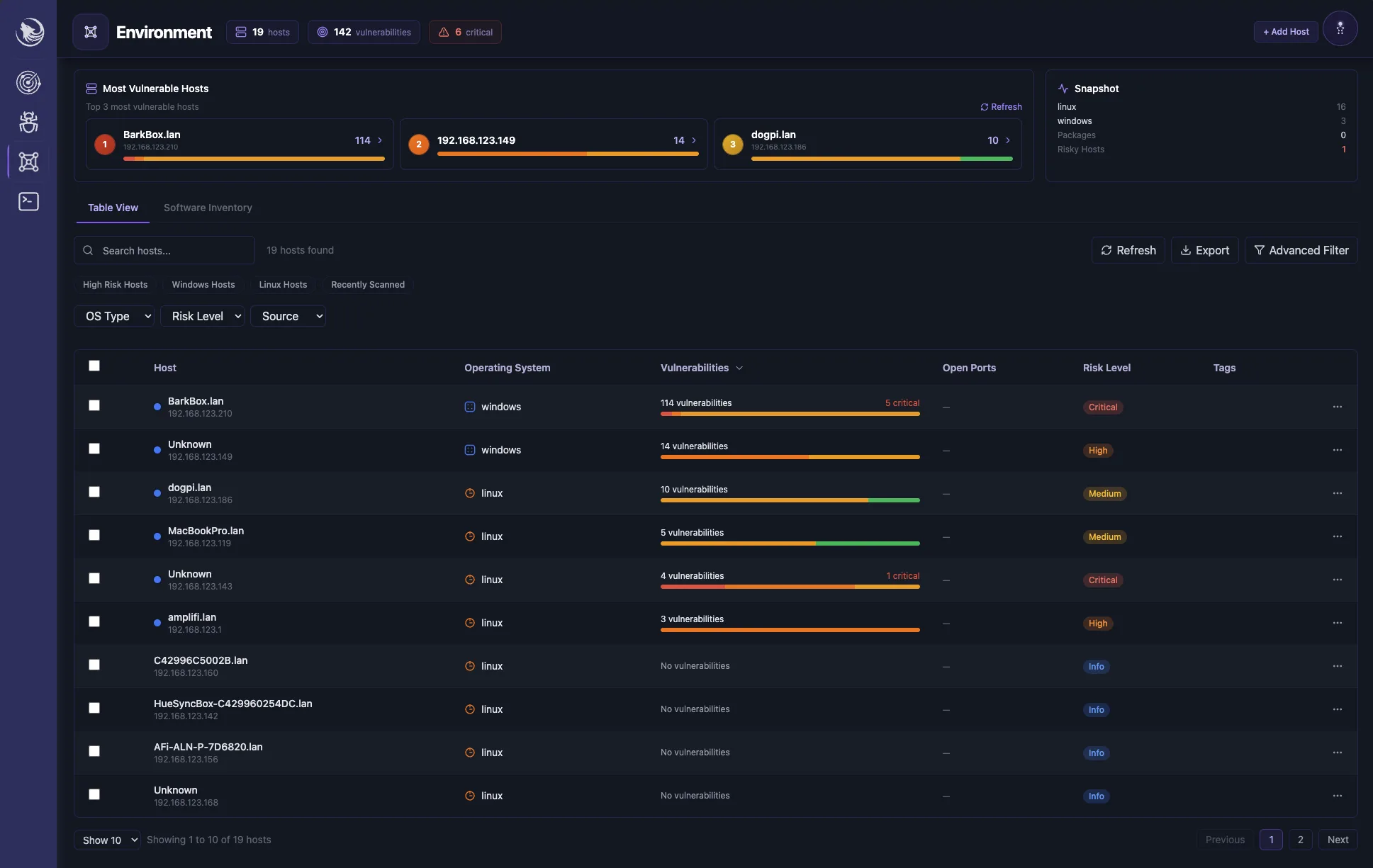
Sirius environment view of assets assessed from inside and outside the perimeter

How the engagement is run

The work, from context to follow-through.

Operators run the engagement. You stay in the decisions that shape scope, evidence, and what gets closed.

What's in scope

  • External perimeter and cloud edge assessment
  • Internal AD and lateral movement paths
  • Wireless and guest network review

The relationship

A program, not a scan subscription.

A dual-scope assessment is the baseline. Keeping that inventory, ranking, and 30/60/90 plan alive is how the next cycle measures progress instead of producing another disconnected PDF.

  1. 01

    Internal and external findings share one inventory and one prioritization model.

  2. 02

    The 30/60/90 plan is written so the next assessment can re-measure the same work.

  3. 03

    Many teams move from this baseline into a living vulnerability management program.

The Open Security difference

Both perspectives, one prioritized plan.

  1. 01

    External perimeter and cloud edge assessed the way an unauthenticated attacker sees it.

  2. 02

    Internal Active Directory and lateral movement paths walked by hand, not just scanned.

  3. 03

    One combined report ranked by real attack-path impact, not two disconnected PDFs.

Outcomes

What is different when you leave.

  1. 01

    A dual-scope assessment report with exploitability context

  2. 02

    A prioritized 30/60/90-day remediation plan

  3. 03

    Wireless and guest network exposure validated

  4. 04

    A baseline you can re-measure against every cycle

Related technology

Operators do the work. Technology keeps it connected.

Sirius

How Sirius holds both sides in one inventory

Assessment results live in Sirius, so internal and external findings share one inventory, one prioritization model, and one trend line — and your next assessment measures progress instead of starting over.

Explore Sirius →
Sirius environment view used for dual-scope assessment results

Common questions

Why assess both internal and external in one engagement?

Attackers use both. External-only work misses lateral movement; internal-only work misses what the internet already knows. One plan beats two reports.

Is this the same as a penetration test?

An assessment maps exposure from both sides and ranks what to fix. A penetration test goes further to prove which paths actually exploit. Many clients do the assessment first.

How long does a dual-scope assessment take?

Most run two to three weeks from kickoff to the combined report, depending on environment size and access.

Will you need internal access?

Yes, for the internal walk — typically a test account or agreed network access. External work does not require that.

What happens after the 30/60/90 plan?

Results can live in Sirius so the next assessment measures the same inventory. Many teams move from a point-in-time assessment into the vulnerability management program.

The Open Security Experience

What comes before and after.

You do not need to buy the entire platform. These stages show how this service becomes more powerful as part of the Open Security Experience.

See both sides of the perimeter.

Talk with an operator about what the internet already knows — and what a credential could reach from inside.