
What’s changing
Pre-positioning in enterprise IT
What it exposes
Quiet, durable access aimed at later movement into OT
Why it matters to the business
A disruption planned for a day you do not choose
Critical Infrastructure
Energy, water, communications, and transportation do not get to pause. We start from the architecture that keeps the service running — enterprise IT, vendor access, and the OT it can reach — then prove the paths that turn a foothold into downtime, and what that downtime actually costs.
Talk to an operator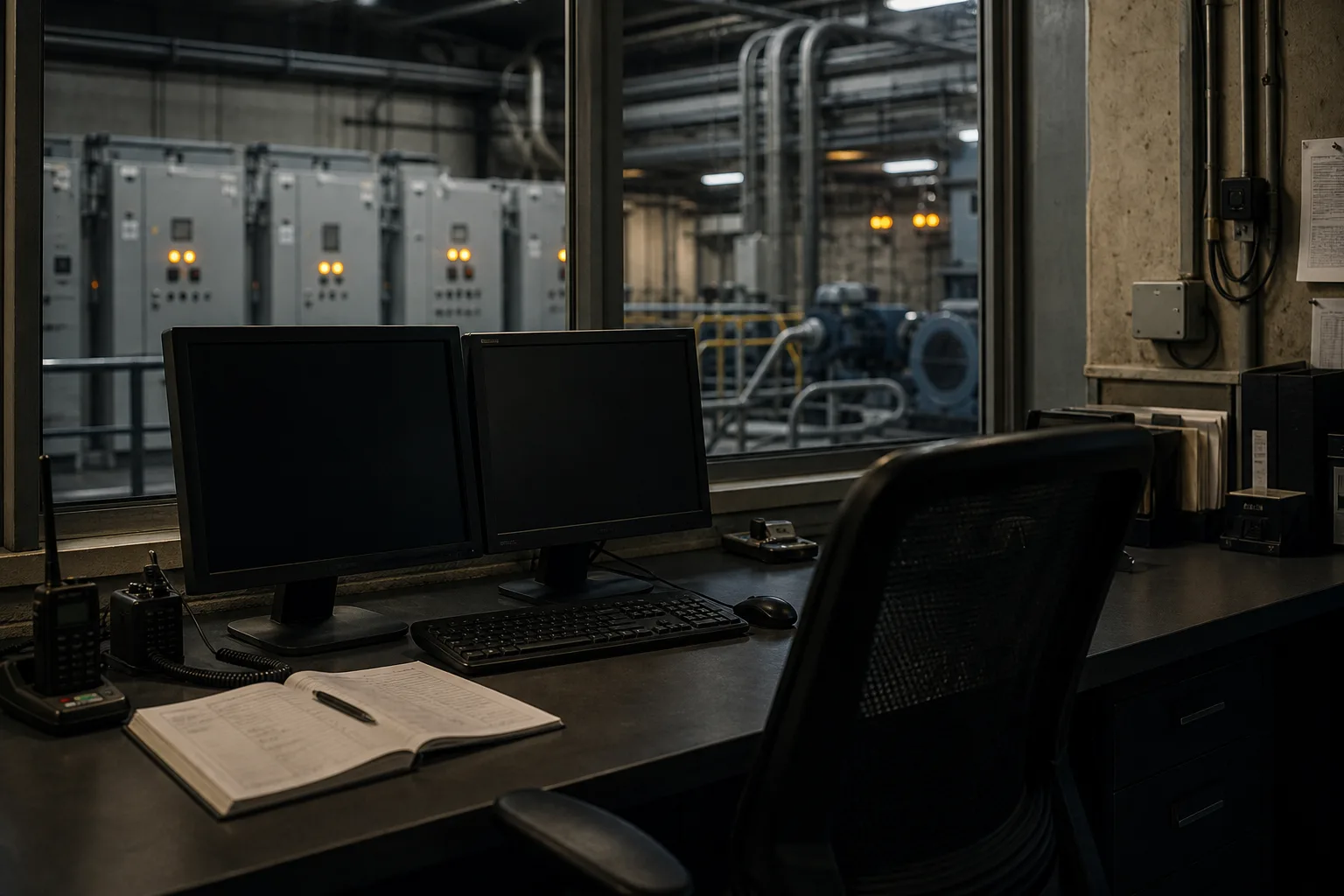
Why this matters now
Nation-state crews pre-position in IT. Criminal crews encrypt the enterprise. Either way, the question is the same: can the service still run — and what does an hour of it cost?
What’s changing
What it exposes
Quiet, durable access aimed at later movement into OT
Why it matters to the business
A disruption planned for a day you do not choose
What’s changing
What it exposes
New paths from office identity into control environments
Why it matters to the business
Downtime, safety, and the cost of an outage hour
What’s changing
What it exposes
Persistent remote tools and default credentials on the boundary
Why it matters to the business
A trusted path that was never yours to begin with
What’s changing
What it exposes
Whether isolation, manual procedures, and recovery actually work
Why it matters to the business
Service continuity when the network cannot be trusted
In this environment
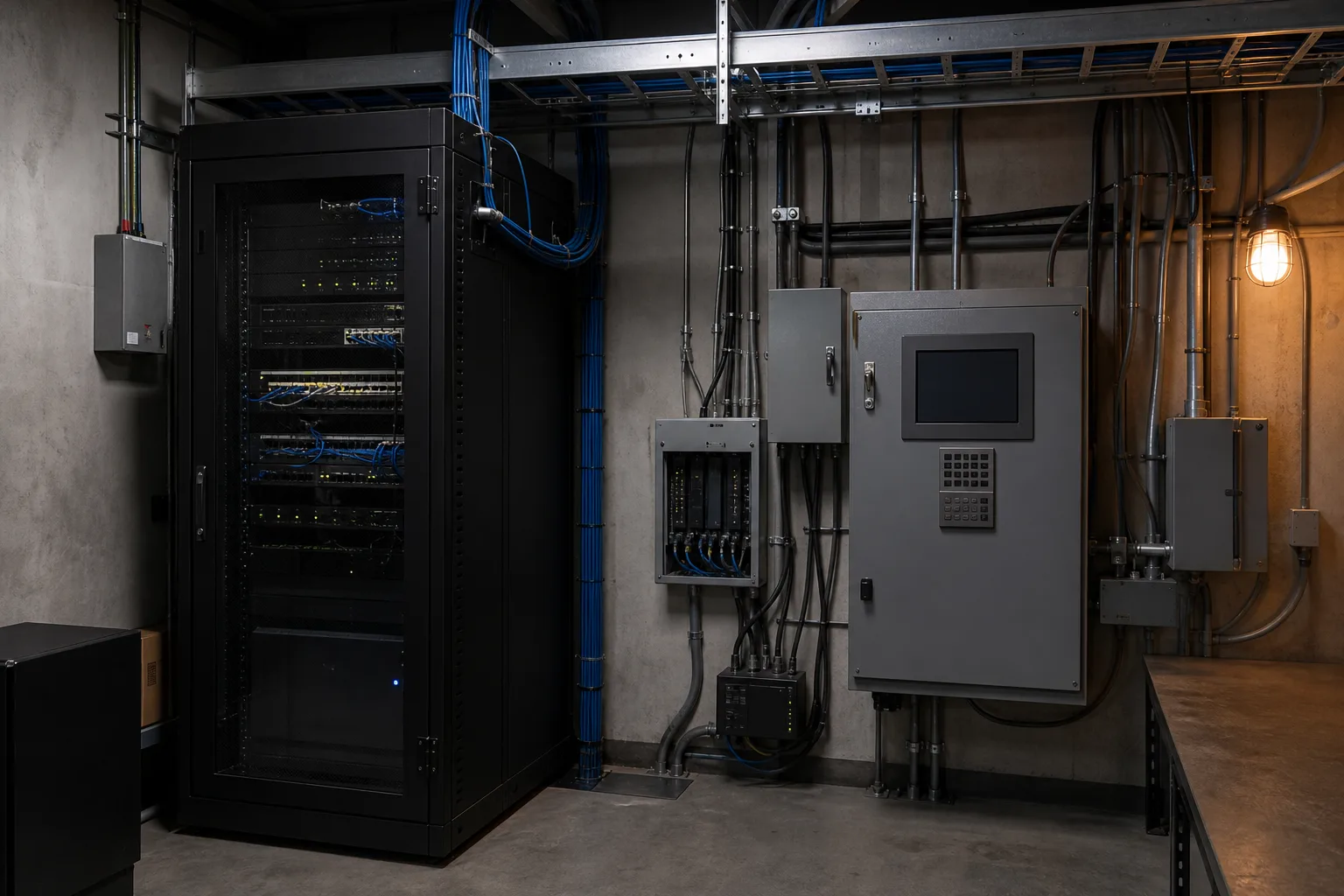
This is not a factory-floor assessment with a different label. We map the bridges between enterprise IT and the systems that keep a public service running — then test them without taking that service down.
Enterprise IT and identity
The office side where most footholds still start.
OT, control, and safety systems
The systems that cannot be treated like a laptop.
Vendor remote access and edge devices
Integrator VPNs, radios, and tools that outlive the project.
Segmentation and isolation paths
Whether the service can be cut away from a compromised IT domain.
Recovery and operate-through procedures
What still runs when communications and remote ops fail.
The question we prove
We walk the identity stores, vendor access, and segmentation gaps that turn an enterprise compromise into an operational event — passively and low-impact first, then only as far as operations leadership has approved.
The path we walk
This is the progression we see in real infrastructure engagements. We find it, prove it, and close it — around the windows the service can actually give us.
01
Enterprise identity
02
IT network
03
Vendor / remote access
04
OT / control
05
Service disruption
Service disruption
Where Open Security meets the path
What leadership sees
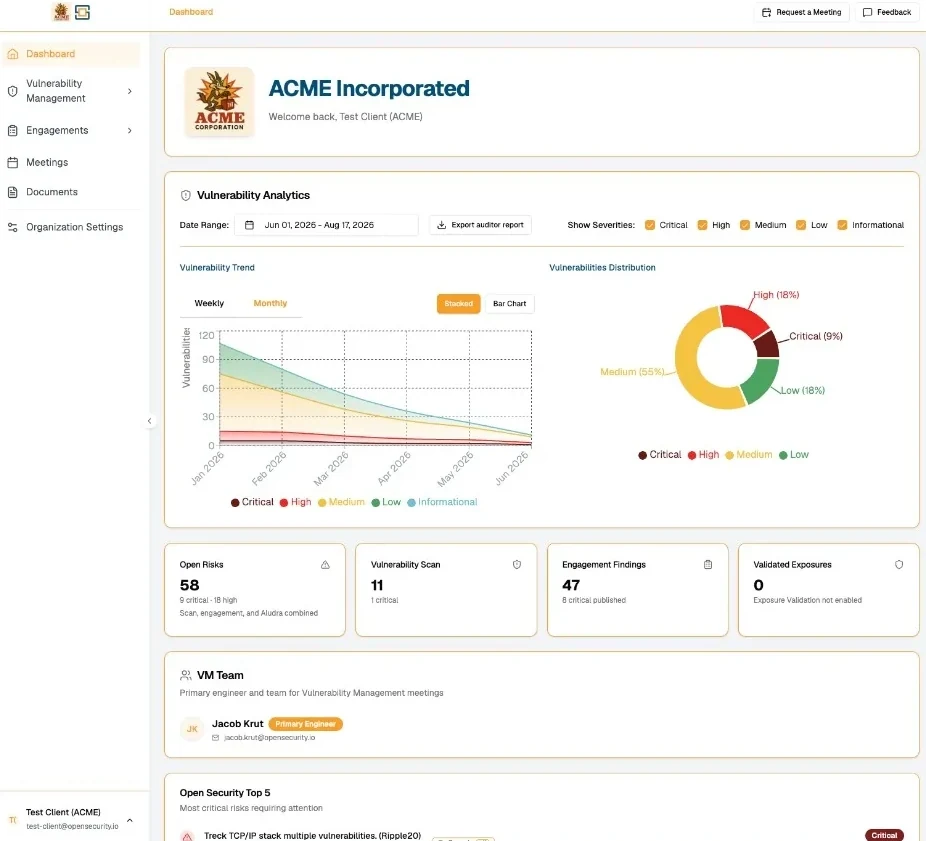
An open port on a controller is not the briefing. Whether that path can stop a service — and what an hour of that stop costs — is.
Which service window, safety system, or public obligation the path can interrupt.
Sequenced by outage cost and safety — not a generic severity score.
Mapped to sector guidance, CISA expectations, and the audits already on the calendar.
Operations, enterprise IT, and the vendor who still has a token.
Hardening planned around service windows, with outage-cost notes.
Portal so operators and the board see residual risk in service-hour language.
Frameworks this maps to
NIST CSF / CISA guidance
Executive baseline for exposure and operate-through planning.
IEC 62443
OT zoning for control environments — tied to the path we walked.
Sector obligations
Energy, water, communications, and transportation reporting you already face.
Your environment determines the engagement
Your environment determines the engagement — not a standard infrastructure package. These are the services and products we reach for first when downtime is a public cost.
Service
Production-safe testing that walks enterprise identity to control — planned around service windows.
Learn moreService
Adversary emulation against the IT-to-OT paths that actually threaten continuity.
Learn moreService
Operate-through and isolation drills that expose process gaps before an outage does.
Learn morePlatform
Operator-led discovery across enterprise and plant-adjacent systems — the map before we walk the path.
Learn morePlatform
Continuous penetration testing that keeps pressure on the IT-to-OT paths after the first engagement.
Learn morePlatform
Leadership sees residual risk as service hours and safety — owner, window, and what is still open.
Learn moreAfter the assessment
A one-time test is not a continuity program. Remediation, retesting, and operate-through readiness stay tied to the windows you can actually use.
An OT-aware risk register with outage-cost notes operations can own.
The same IT-to-OT chain, walked again, after the window you scheduled.
Who disconnects a vendor, who runs manual, and how long the service can last.
Workshops that help people act fast on alerts without making the outage worse.
Enterprise and boundary systems stay in view between assessments.
Proof, in this industry’s language
Regional Utility
IT-to-OT
path proven before it became an outage
Vendor remote access and a shared identity store opened a route from enterprise IT to control — found while the service was still running.
Talk through your environment with an operator — enterprise IT, vendors, and the OT the public still depends on.