
What’s changing
Ransomware pressure
What it exposes
Clinical-system disruption
Why it matters to the business
Patient care and operational risk
Healthcare
Clinicians keep working whether the EHR is up or not. We start from the architecture a hospital or clinic actually runs — records, connected devices, identity, and the vendors that touch them — then prove which paths threaten patient safety, continuity, and regulated data.
Talk to an operator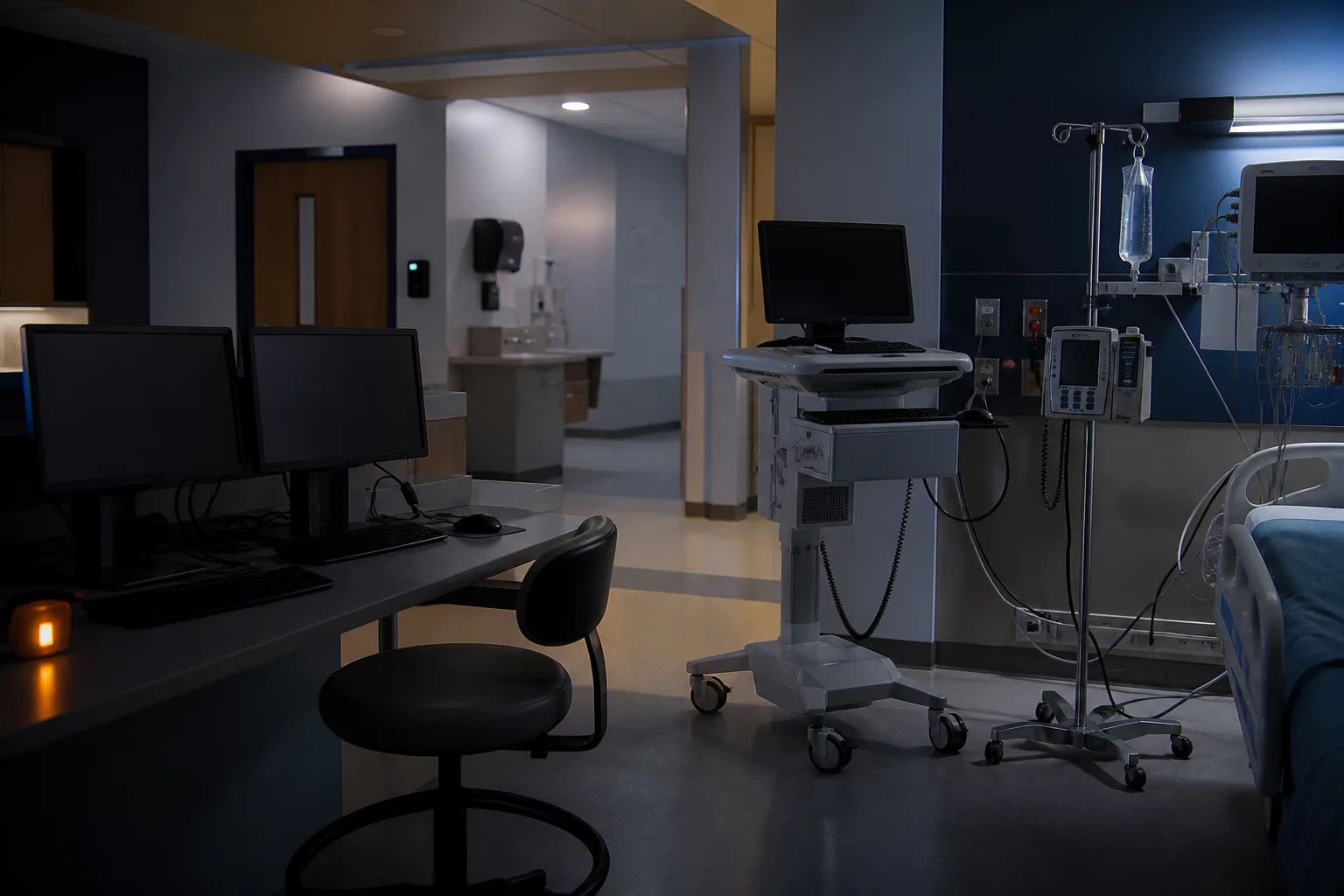
Why this matters now
Healthcare is not a generic target. Crews know downtime becomes a care problem — and that credentials and third parties are often the shortest path in.
What’s changing
What it exposes
Clinical-system disruption
Why it matters to the business
Patient care and operational risk
What’s changing
What it exposes
Cascaded downtime across care and billing
Why it matters to the business
Care delivery interrupted, plus breach exposure
What’s changing
What it exposes
A path from office IT into clinical systems
Why it matters to the business
Safety and continuity risk
What’s changing
What it exposes
EHR and imaging opened at scale
Why it matters to the business
Regulated records and diversion risk
In this environment
We map the systems that keep care moving — not a generic office checklist. The engagement is built around the architecture you actually run.
EHR and clinical applications
The records and workflows clinicians cannot work around.
Cloud and hosted care platforms
Portals, imaging archives, and the vendors that host them.
Connected medical devices
Infusion, monitoring, and imaging that often sit on flat segments.
Identity and privileged access
Staff, contractors, and break-glass accounts that reach care systems.
Third-party and remote access
Business associates, VPNs, and support paths into the environment.
The question we prove
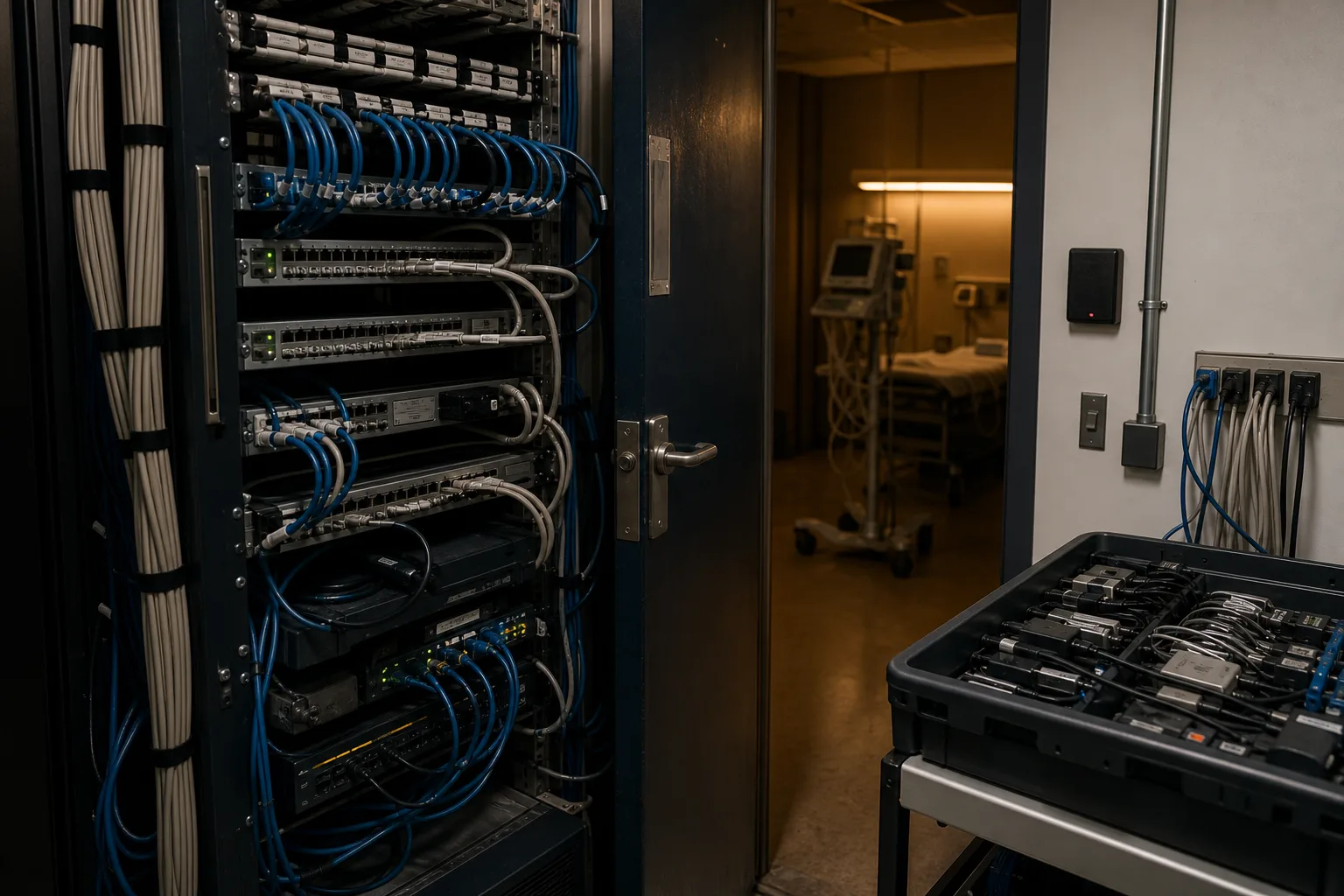
We do not stop at a list of open ports. We prove whether a phished inbox, a vendor VPN, or a flat device segment becomes a path into records, imaging, or the systems clinicians depend on.
The path we walk
This is the progression we see in real healthcare engagements. We find it, prove it, and close it — in that order.
01
Phishing / identity compromise
02
Remote access
03
EHR / clinical environment
04
Operational disruption / patient impact
Patient impact
Where Open Security meets the path
What leadership sees
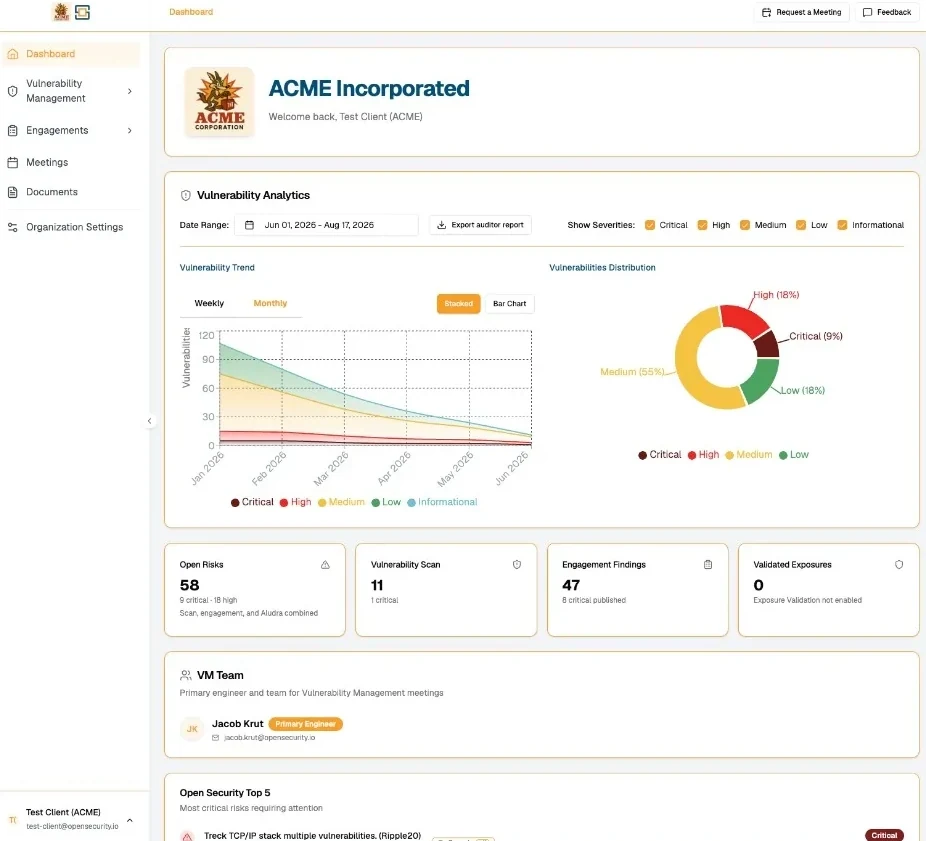
A vulnerability is not the story. What it can interrupt — and who has to fund the fix — is. Leadership sees residual risk in operational language, not a CVE backlog.
Which clinical workflow, record set, or care window is actually at risk.
Sequenced by patient safety and continuity — not CVSS alone.
Mapped to the Security Rule and breach obligations leadership already reports.
Clinical IT, security, and the vendor who actually holds the control.
A fundable sequence around clinical windows, not a dump of tickets.
Portal so executives can see what is still open — and what it would cost care.
Frameworks this maps to
HIPAA Security Rule
Administrative, physical, and technical safeguards — tied to the path we proved.
HITECH
Breach notification and business-associate risk when a third party is on the path.
NIST CSF
Baseline for exposure trending and executive reporting.
Your environment determines the engagement
Your environment determines the engagement — not a standard healthcare package. These are the services and products we reach for first in clinical settings.
Service
Continuous visibility across clinical and back-office systems, prioritized by patient-safety impact.
Learn moreService
EHR portals, patient-facing apps, and the integrations that move regulated data.
Learn moreService
Operator-led testing of identity, remote access, and the paths that reach care systems.
Learn moreService
Ransomware and phishing scenarios that pressure-test clinical and back-office response.
Learn moreAfter the assessment
Closing a path once is not the same as keeping care protected. We stay with remediation, retesting, and readiness so progress is measurable.
Fixes sequenced so patient-safety gaps close first, without surprising a care team mid-shift.
The same identity-to-EHR chain, walked again, so leadership is not taking a ticket status on faith.
Ransomware and third-party outage drills that rehearse diversion, downtime, and who decides.
Awareness built from the credential and vendor-impersonation paths we see in healthcare engagements.
The systems that cannot go down stay in view after the assessment window closes.
Proof, in this industry’s language
Multi-site Clinic
14 days
to a remediation plan leadership could fund
EHR portal testing tied findings to patient-safety priority and Security Rule controls — a plan the clinic could sequence, not a stack of unowned tickets.
Talk through your clinical environment with an operator — records, devices, identity, and the vendors that touch them.