
What’s changing
Identity and social engineering
What it exposes
Employee or customer compromise — including AI impersonation
Why it matters to the business
Fraud and financial loss
Banking & Finance
Fraud crews do not need to encrypt a core to win. They need identity, a rushed wire, or an over-permissive integration. We test community banks, credit unions, and financial firms against those paths — framed for the board and the examiner.
Talk to an operator
Why this matters now
The costliest financial crime still runs through people and process. Identity, wires, and third-party access are how it becomes a transfer.
What’s changing
What it exposes
Employee or customer compromise — including AI impersonation
Why it matters to the business
Fraud and financial loss
What’s changing
What it exposes
Unauthorized transfers that look like business as usual
Why it matters to the business
Loss, plus the evidence examiners will ask for
What’s changing
What it exposes
A silent path into core workflows
Why it matters to the business
Customer trust and regulatory exposure
What’s changing
What it exposes
Operations halted at peak cycles
Why it matters to the business
Availability, reputation, and examiner scrutiny
In this environment
We start from the workflows that move money — identity, wires, APIs, and the third parties sitting on those paths — not a generic network sweep.
Identity and privileged access
Employees, customers, and the accounts that can authorize a transfer.
Transaction and core systems
The workflows where fraud becomes a posted movement of funds.
APIs and cloud banking
Integrations and tokens that extend the core beyond the branch.
Employee access and back office
Shared drives, ticketing, and the systems that halt operations when encrypted.
Third parties and wire workflows
Vendors, fintechs, and the callback process that is supposed to stop a bad transfer.
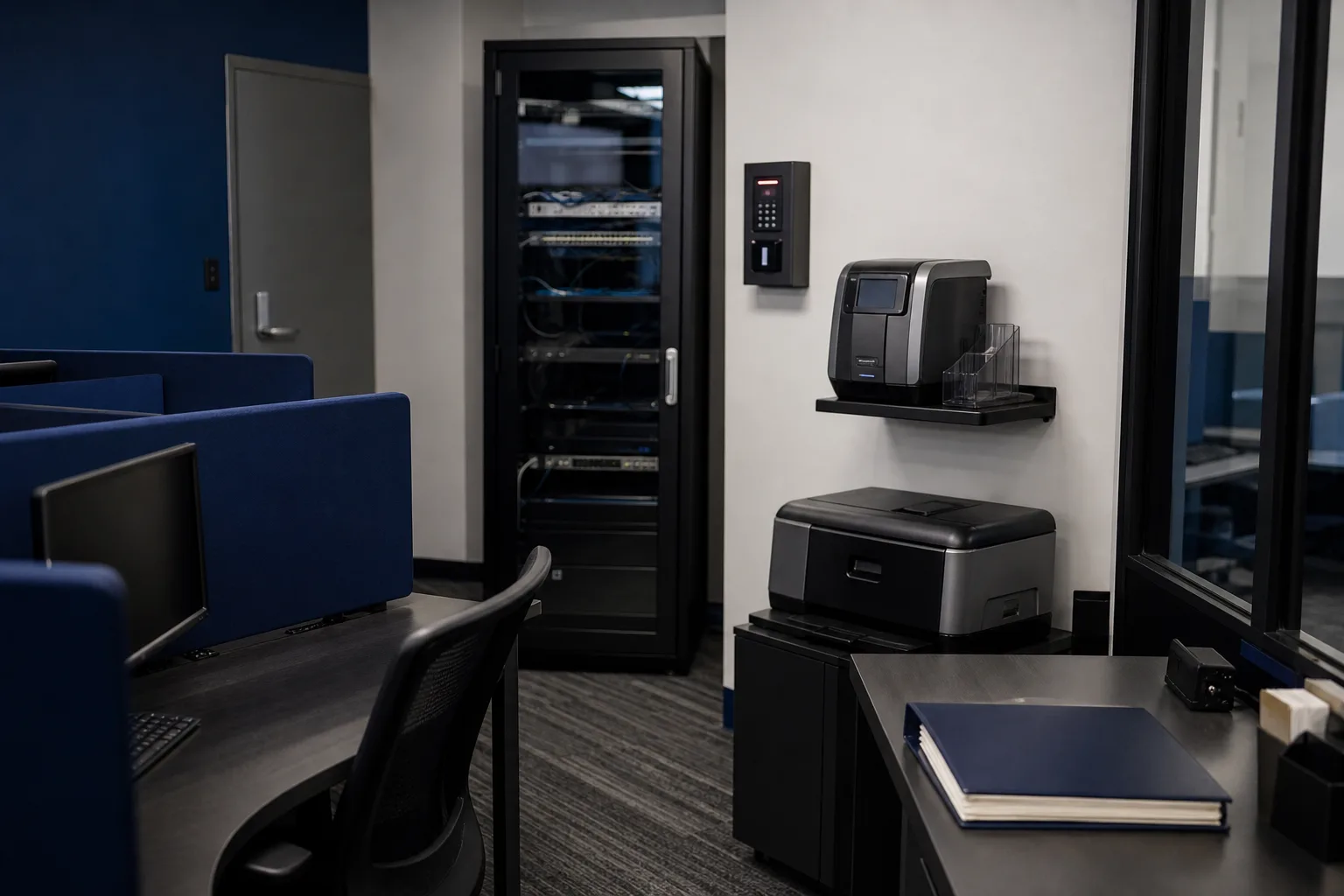
The question we prove
We prove whether a convincing email, a stolen session, or an over-permissive integration can reach a wire, a payment file, or a core workflow — and whether the controls that should stop it actually hold.
The path we walk
This is the progression we see in real financial engagements. We find it, prove it, and close it — in language a board can act on.
01
Employee / customer identity
02
Privileged access
03
Financial workflow
04
Transaction / wire activity
05
Financial loss
Financial loss
Where Open Security meets the path
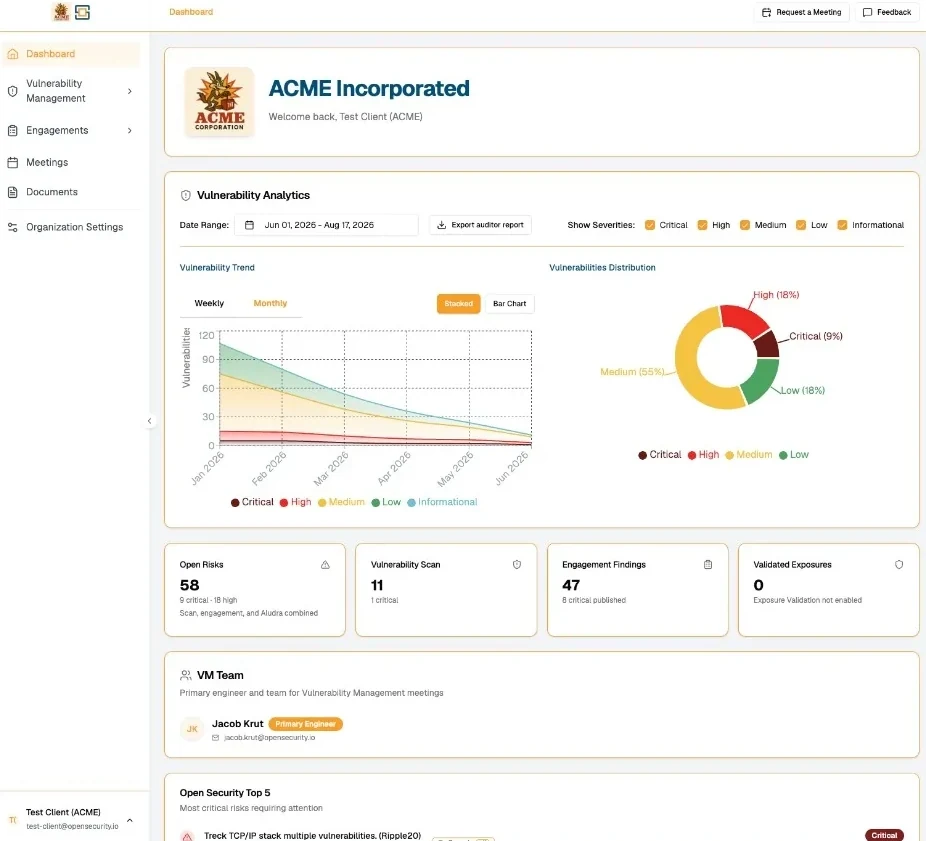
What leadership sees
A weak control is not the briefing. Whether it can move money — and what evidence you can show an examiner — is.
Which transfer, customer channel, or back-office process the path can abuse.
Sequenced by fraud impact and transaction integrity — not a generic score.
Mapped to FFIEC guidance, PCI, and the customer-data rules already on the exam calendar.
Treasury, fraud, information security, and the vendor on the integration.
Controls sequenced so the money-moving path closes first.
Portal so the board and examiners see residual risk as fraud exposure, not ticket volume.
Frameworks this maps to
PCI DSS
Cardholder-data testing and evidence when the path touches payments.
FFIEC guidance
Alignment for community bank and credit union programs.
GLBA / SOC 2
Customer data protection and third-party assurance.
Your environment determines the engagement
Your environment determines the engagement — not a standard banking package. These are the services and products we reach for first when money is the target.
Service
Digital banking, core integrations, and the tokens that should not be able to move funds.
Learn moreService
Network and identity testing against the paths that reach financial workflows.
Learn moreService
Fraud-path and ransomware scenarios that pressure-test people, process, and core access.
Learn moreService
Wire-fraud and BEC drills built from the lures used in real engagements.
Learn moreAfter the assessment
Closing one wire path is not the same as staying ahead of the next lure. Remediation, retesting, and readiness stay tied to how money actually moves.
The transfer path closes first; the rest of the backlog follows in examiner-ready order.
The same identity-to-wire path, walked again, so evidence is more than a ticket status.
Callback failures, AI impersonation, and who can freeze a transfer after hours.
Awareness built from BEC and vendor-impersonation paths we see against institutions your size.
Identity, APIs, and internet-facing banking systems stay in view between exams.
Proof, in this industry’s language
Community Bank
$2.4M
wire-fraud chain stopped before it moved
A tabletop replay plus MFA hardening closed the exact path operators walked — framed for the board, not as a phishing score.
Talk through your transaction environment with an operator — identity, wires, APIs, and the controls examiners will ask about.