
Then the experience continues
See & Act → Improve
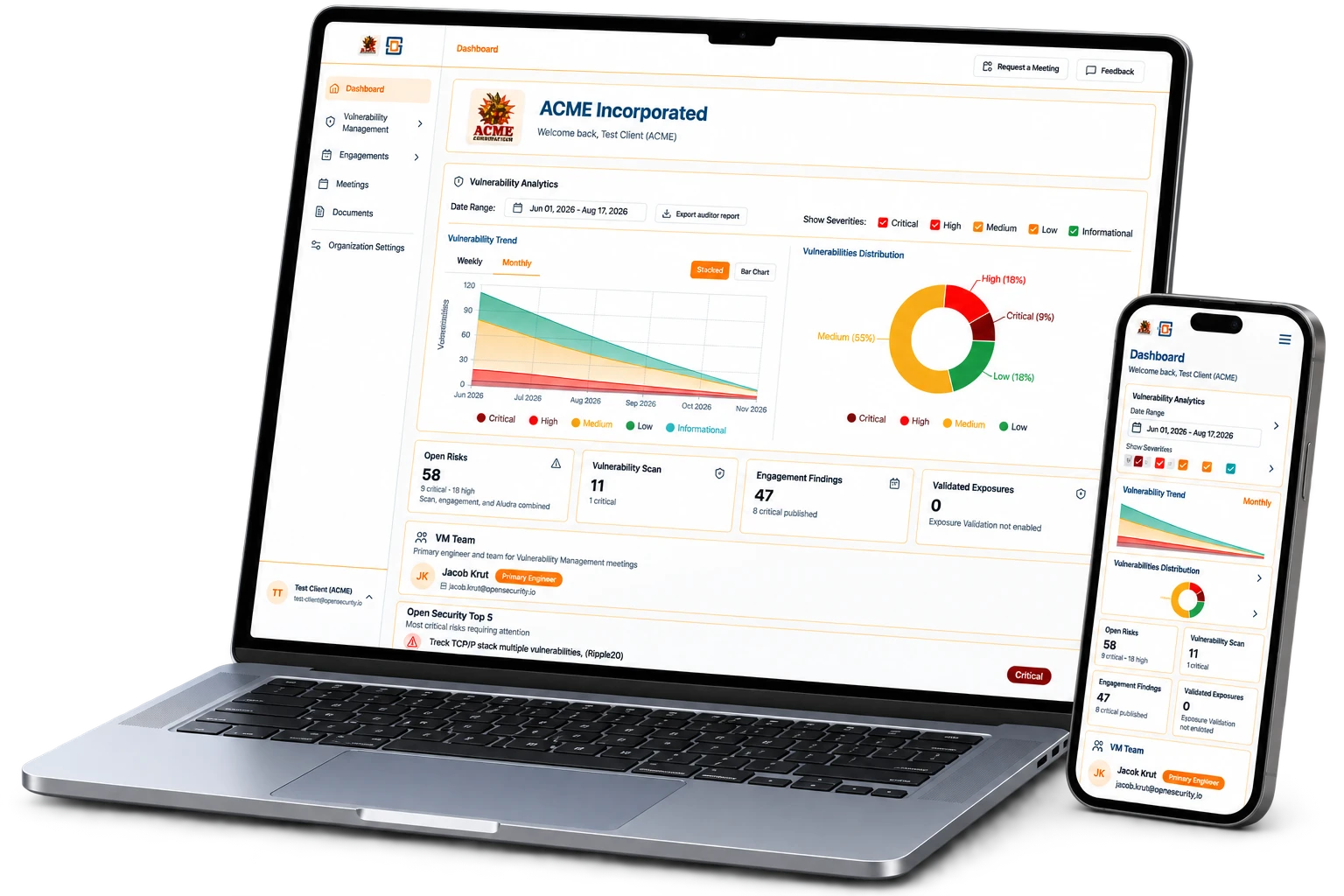
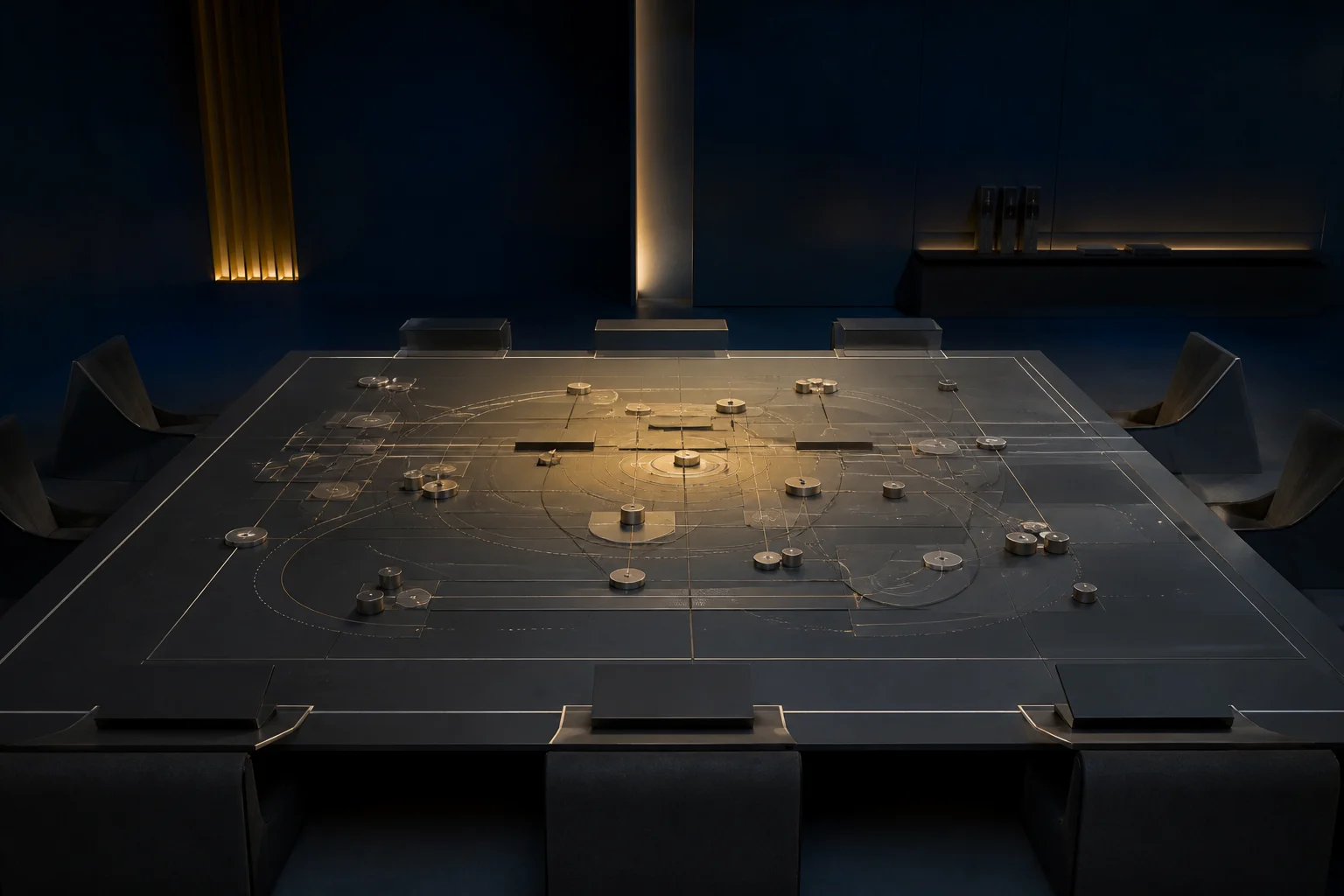
Validated findings stay connected to See & Act and Improve, so the work is not a one-off PDF.
Security Validation
Operator-led adversarial testing that proves which attack paths actually work against your business — and what closing them is worth.

The Open Security Experience
Start in Discover, choose what to prove, and validate it through operator-led testing. See & Act and Improve stay in the same experience.
Discover → Validate
The program on this page is the full engagement. Pick a path when you already know the environment, asset, or question to test.
Then the experience continues
Validated findings stay connected to See & Act and Improve, so the work is not a one-off PDF.
The problem
A yearly test that produces a hundred-page report does not tell you what to fix, fund, or prioritize. Findings without exploitability context are noise — and noise is why critical paths stay open.
Reports rank by severity, not by whether a determined adversary would actually take the path.
Remediation teams cannot tell which findings change the business if they close them.
The next test starts from zero because last year’s context never stayed with the team.
The path
The question is not how many findings you have. It is which route actually works.
How the engagement is run
Operators run the engagement. You stay in the decisions that shape scope, evidence, and what gets closed.
Align assets, paths, and what not to test — so budget lands on business risk, not a template.
Hands-on testing with operator-led TTPs against the environment as it actually runs.
Evidence for the routes that work — not a list of theoretical findings.
Risk-ranked findings your engineers can replay and your board can follow.
Support the fix and confirm closure so open questions do not become next year’s report.
The relationship
A test that disappears into a binder is a snapshot. An operator relationship keeps the environment, the evidence, and the closures connected — so the next engagement measures improvement instead of repeating the same story.
The same operators retain context between tests — your environment, your risk threshold, and what you already closed.
Validated findings stay connected to remediation and retest, not stranded in a yearly PDF.
Each cycle has a baseline. You can see whether the paths that mattered last time are actually gone.
The Open Security difference
Every engagement is led by senior operators doing hands-on testing — not junior analysts re-running scan output.
We scope around your business risk threshold first, and we tell you what not to test to save effort and budget.
We stay through remediation and retest, so findings become validated closures instead of open questions.
Outcomes
A risk-ranked register of exploitable findings — not scanner noise
An attack narrative your engineers can replay and your board can follow
Remediation guidance sequenced by business impact
Validated closure: we retest, you prove the risk is gone
What complements this engagement — and what teams typically run next.
Operators do the work. Technology keeps it connected.
Aludra
Operators run Aludra — our AI-powered, human-engineer-led continuous cybersecurity platform — so the engagement covers more ground and delivers proven-exploitable findings.
Explore Aludra →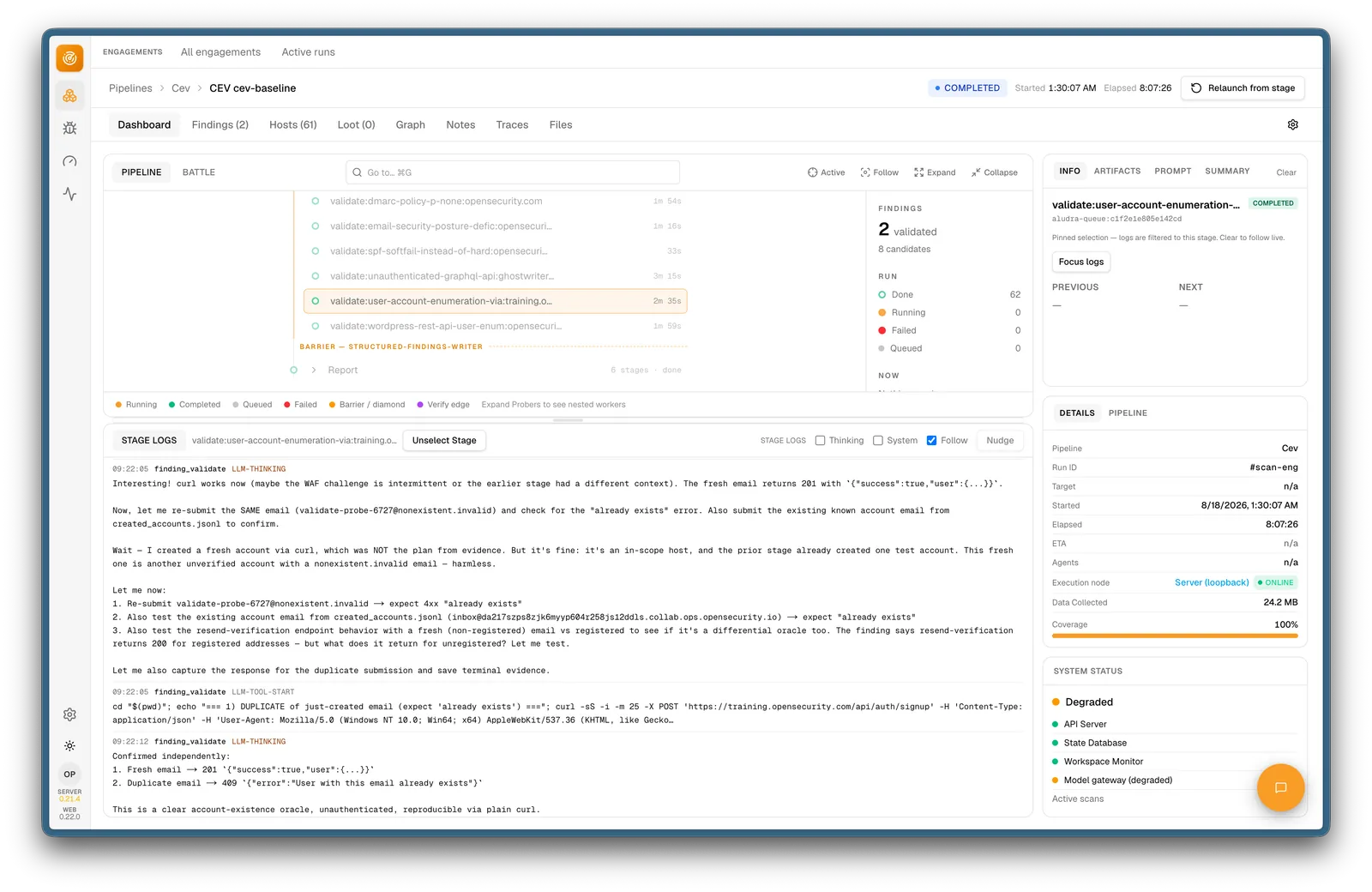
A scan lists possibilities. This engagement proves which attack paths actually work, with exploit evidence and business impact — then stays through remediation and retest.
We coordinate windows and safe-test rules with your operations team before any testing starts. High-impact techniques are gated; you approve the blast radius.
Most network and application tests run two to four weeks from kickoff to readout, depending on scope and environment complexity. We confirm the window in scoping.
A point of contact, agreed scope, and access or test accounts where authenticated testing is in play. We handle the rest and keep you in the decisions that matter.
Yes. Critical and high findings include retest criteria. We confirm the path is closed instead of leaving a finding open in a PDF.
Operators run Aludra — our AI-powered, human-engineer-led continuous cybersecurity platform — to cover more ground and produce proven-exploitable findings.
The Open Security Experience
You do not need to buy the entire platform. These stages show how this service becomes more powerful as part of the Open Security Experience.
Talk through scope with an operator — the assets that matter, the paths worth testing, and what closing them is worth.