
What’s changing
Diligence that prices risk into the offer
What it exposes
Inherited identity, cloud, and access you cannot see on day one
Why it matters to the business
A slower close — or terms written around what you did not find
Private Equity
You inherit infrastructure you did not build. Buyers now price that risk into the offer. We start from the architecture each portco actually runs, then keep pressure on it through the hold period — so diligence, value creation, and the exit file are evidence, not a last-minute scramble.
Talk to an operator
Why this matters now
Cyber is no longer a questionnaire at signing. It is a line in the model — and the firms that treat it as a value-creation lever walk into exit with a story buyers will pay for.
What’s changing
What it exposes
Inherited identity, cloud, and access you cannot see on day one
Why it matters to the business
A slower close — or terms written around what you did not find
What’s changing
What it exposes
Gaps that compound across a portfolio with thin security teams
Why it matters to the business
Value creation you can show — or a scramble in the last two quarters
What’s changing
What it exposes
Whether residual risk is proven closed, or just ticketed
Why it matters to the business
Exit narrative and valuation, not a compliance appendix
What’s changing
What it exposes
Portcos that cannot staff continuous testing themselves
Why it matters to the business
A platform motion — Aludra and Portal — that the firm can actually run
In this environment
The firm needs one way to see inherited risk. Each portco has its own architecture. We map both — then build the engagement around the deal calendar, not a generic assessment.
Inherited identity and access
Accounts, vendors, and privileges that arrived with the asset.
Cloud and application estates
What the portco actually runs — including what diligence missed.
Deal-speed and first-100-days windows
What has to be known before close, and what can wait until value creation.
Thin portco security teams
Where continuous testing has to come from the platform, not a new hire.
Firm-level visibility
What operating partners and the deal team can see without another slide deck.
The question we prove
We prove whether inherited identity, cloud, or a vendor path is actually exploitable — then keep testing it. The point is not a one-time report. It is evidence the next buyer can diligence.
The path we walk
This is the progression that turns a portco IT problem into a value event. We find it, prove it, and keep it closed through the hold period.
01
Inherited identity
02
Unknown cloud / app
03
Privilege
04
Material incident
05
Valuation / exit impact
Valuation impact
Where Open Security meets the path
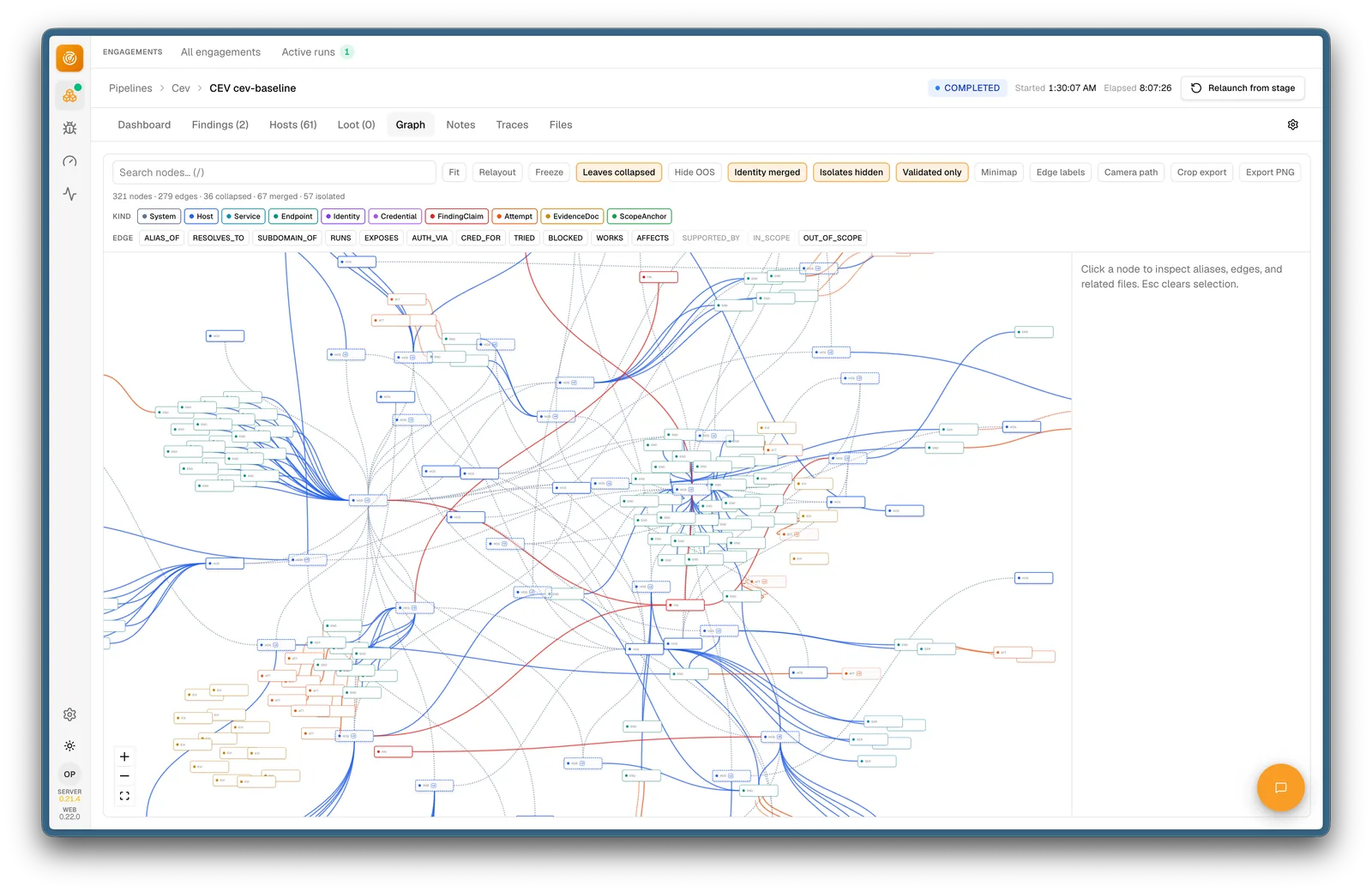
What leadership sees
A vulnerability list is not an operating partner briefing. Whether it can become a material incident — and what that does to close or exit — is.
Which portco, deal timeline, or exit narrative the path can actually hit.
Sequenced by valuation impact — not a generic severity score.
Mapped to buyer diligence, LP questions, and the sector rules that portco already faces.
Portco management, the operating partner, and the vendor still on the path.
A fundable sequence inside the hold period — not a cleanup in the last quarter.
Portal so the firm sees residual risk across the portfolio in deal language.
Frameworks this maps to
Buyer diligence
Evidence a sophisticated buyer will actually read at exit.
SOC 2 / sector rules
Portco obligations that show up in the data room.
LP governance
A defensible answer before the next capital-raise question.
Your environment determines the engagement
Your environment determines the engagement — not a standard PE package. The fight to win here is the platform: Aludra for continuous validation at the portcos, Portal for the firm.
Service
Prove inherited paths at diligence and in the first 100 days — before they price into the model.
Learn moreService
The software and integrations a portco actually ships — especially when that is the asset.
Learn moreService
Material-incident scenarios framed for operating partners, not a phishing score.
Learn moreService
Hold-period and exit-readiness drills the deal team can sit in.
Learn morePlatform
Continuous penetration testing at the portco — without staffing a security-engineer army at every asset.
Learn morePlatform
Firm-level visibility: residual risk, owner, and what still threatens close or exit.
Learn morePlatform
The discovery map on day one of ownership — what you inherited before an attacker finds it.
Learn moreAfter the assessment
A diligence snapshot is not an exit file. Continuous validation, retesting, and readiness stay on the asset until the buyer reads the evidence.
Fixes sequenced so material paths close early in the hold — not in the sale window.
The same inherited path, walked again, so the data room is more than a ticket export.
Who calls the operating partner, what hits the model, and how fast the story holds.
Awareness sized for thin teams — not an enterprise program they cannot staff.
Aludra keeps pressure on changing identity and cloud between assessments.
Proof, in this industry’s language
Mid-market sponsor
Hold period
continuous validation without a security-engineer army
Aludra kept pressure on inherited identity and cloud paths so the exit file was evidence — not a last-minute scramble.
Talk through the portfolio with an operator. Diligence, hold-period validation, and an exit file buyers will actually read.