
What’s changing
OAuth and AI-SaaS integrations
What it exposes
Persistent tokens that outlive the tool — and the employee
Why it matters to the business
A vendor compromise becomes your customer-data event
Technology & SaaS
Software, APIs, and AI features are the business — and the perimeter. We start from the architecture you actually ship — identity, integrations, pipelines, and tenant boundaries — then prove which paths reach customer data before a customer finds them.
Talk to an operator
Why this matters now
The shortest path into a SaaS company is rarely the login page. It is a token, an API, or an AI integration that already has permission.
What’s changing
What it exposes
Persistent tokens that outlive the tool — and the employee
Why it matters to the business
A vendor compromise becomes your customer-data event
What’s changing
What it exposes
Broken auth, over-broad scopes, and tenant isolation gaps
Why it matters to the business
One defect scales to every customer on the platform
What’s changing
What it exposes
Service accounts, keys, and webhooks outside SSO and MFA
Why it matters to the business
Access that never logs in — and never gets offboarded
What’s changing
What it exposes
New retrieval, action, and data-handling paths in the same release train
Why it matters to the business
A ship date that also ships an untested attack surface
In this environment
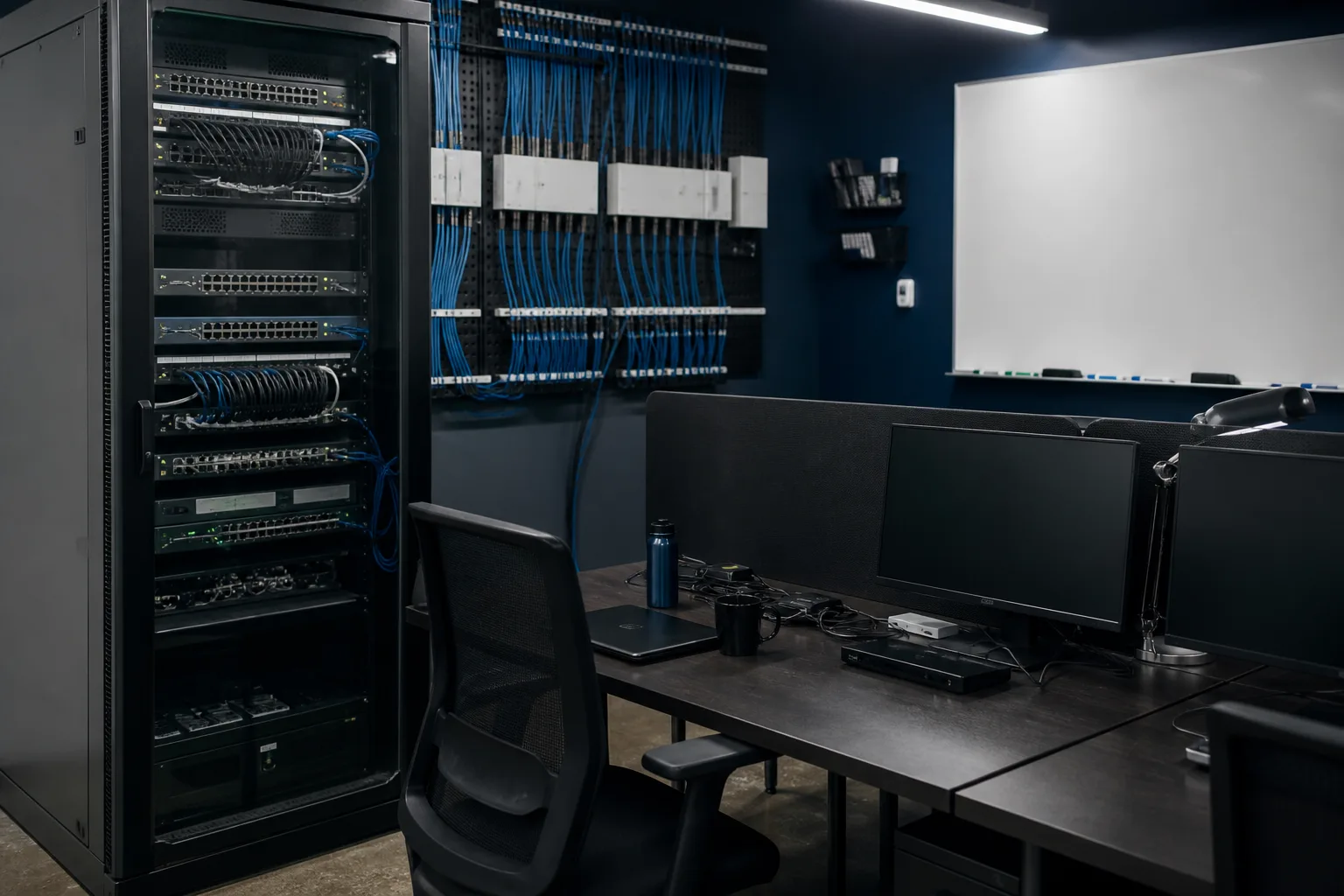
We map the systems that ship the product — not a generic office network. The engagement is built around how you actually build, integrate, and isolate tenants.
APIs and application logic
The contracts customers and partners actually call.
Cloud identity and tenant boundaries
Who can reach whose data — including the keys that never log in.
CI/CD and release infrastructure
The path from a commit to production, and who can change it.
OAuth, integrations, and third parties
Tokens and SaaS-to-SaaS trust that sit outside the login page.
AI features and actions
New retrieval and tool-use paths that ship with the product.
The question we prove
We do not stop at a scanner finding on an endpoint. We prove whether OAuth, an API defect, or a CI/CD path becomes a customer-data event — and whether tenant isolation holds when someone tries.
The path we walk
This is the progression we see in real software engagements. We find it, prove it, and close it — before the next release makes it louder.
01
Compromised identity / OAuth
02
Cloud or CI/CD
03
API or AI feature
04
Tenant data / customer impact
Customer impact
Where Open Security meets the path
What leadership sees
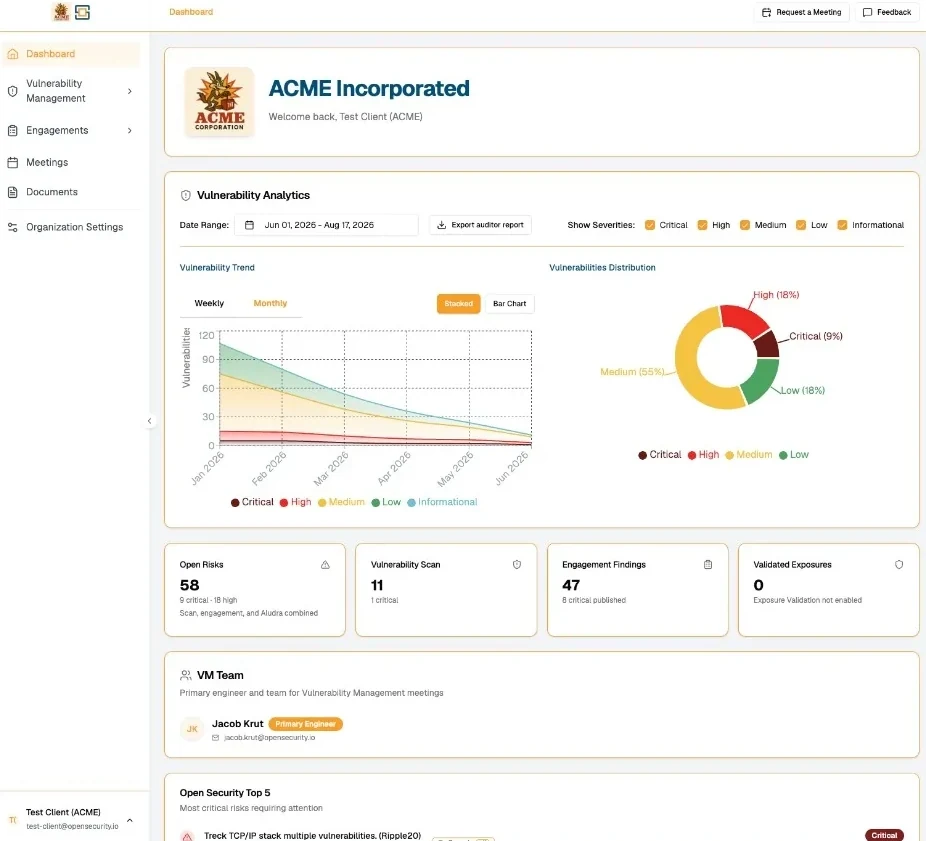
A CVSS score is not the briefing. Whether it crosses a tenant boundary — and whether you can still ship — is.
Which tenant, API, or customer workflow the path can actually reach.
Sequenced by customer impact and launch risk — not a generic severity.
Mapped to SOC 2, customer audits, and the privacy obligations already in the contract.
Product, platform, and the vendor who still holds the token.
A sequence engineering can ship — not a dump of tickets into the backlog.
Portal so executives see residual risk as customer trust, not CVE volume.
Frameworks this maps to
SOC 2
Evidence that controls hold on the paths that reach customer data.
Customer security reviews
Answers for the questionnaires that block enterprise deals.
NIST CSF
A baseline for exposure trending as the product ships.
Your environment determines the engagement
Your environment determines the engagement — not a standard software package. These are the services and products we reach for first when the product is the perimeter.
Service
Tenant isolation, auth, and the integrations that move customer data.
Learn moreService
Operator-led testing of identity, cloud, and the paths that reach production.
Learn moreService
Adversary emulation against CI/CD, tokens, and the features you just shipped.
Learn moreService
Incident drills for a product outage, a token leak, or a customer-facing breach.
Learn moreAfter the assessment
Closing one API path is not the same as staying ahead of the next release. Remediation, retesting, and continuous validation stay tied to how you ship.
Fixes sequenced so tenant-isolation gaps close before the next GA.
The token-to-tenant chain, walked again, so a ticket status is not the evidence.
Who tells the customer, who rotates the keys, and what the status page says.
Awareness built from CI/CD, vendor, and AI-tool impersonation we see against software teams.
APIs, identity, and internet-facing product surfaces stay in view between releases.
Proof, in this industry’s language
SaaS Provider
12
auth-bypass paths closed before GA
Application and CI/CD testing found tenant-isolation gaps before launch — a ship date that did not also ship the attack path.
Talk through your product environment with an operator — APIs, identity, pipelines, and the AI features in the next release.