
Findings without context
Severity scores alone cannot tell you which of 1,200 findings an attacker would actually use first.
Sirius is the open-source scanner at the heart of our visibility layer: network discovery, CVE detection, agent telemetry, and operator-driven triage in one interface. Free to run anywhere, and hardened by the operators who use it every day.
In the hands of an operator, the right tool changes everything.
v1.0.0, production-ready scanning and operator workflows
The Open Security Experience
Sirius is where the Open Security Experience begins: continuous visibility across the attack surface so operators can find what changed, feed validation, and keep the picture current.
The problem
The incumbents got big and stopped listening to the people using their tools every day. The result: thousands of findings, no exploitability context, and security teams that spend more time exporting CSVs than reducing risk. Organizations do not need more findings. They need better decisions.
Severity scores alone cannot tell you which of 1,200 findings an attacker would actually use first.
Triage, investigation, and remediation live in different tools, so the people doing the work lose hours to swivel-chairing.
A raw export is not a risk story. Boards need to see exposure trending down, not a longer list.
How Sirius works
Sirius strengthens Discover in the Open Security Experience, and keeps feeding Validate, See & Act, and Improve as the environment changes.
01 · Discover
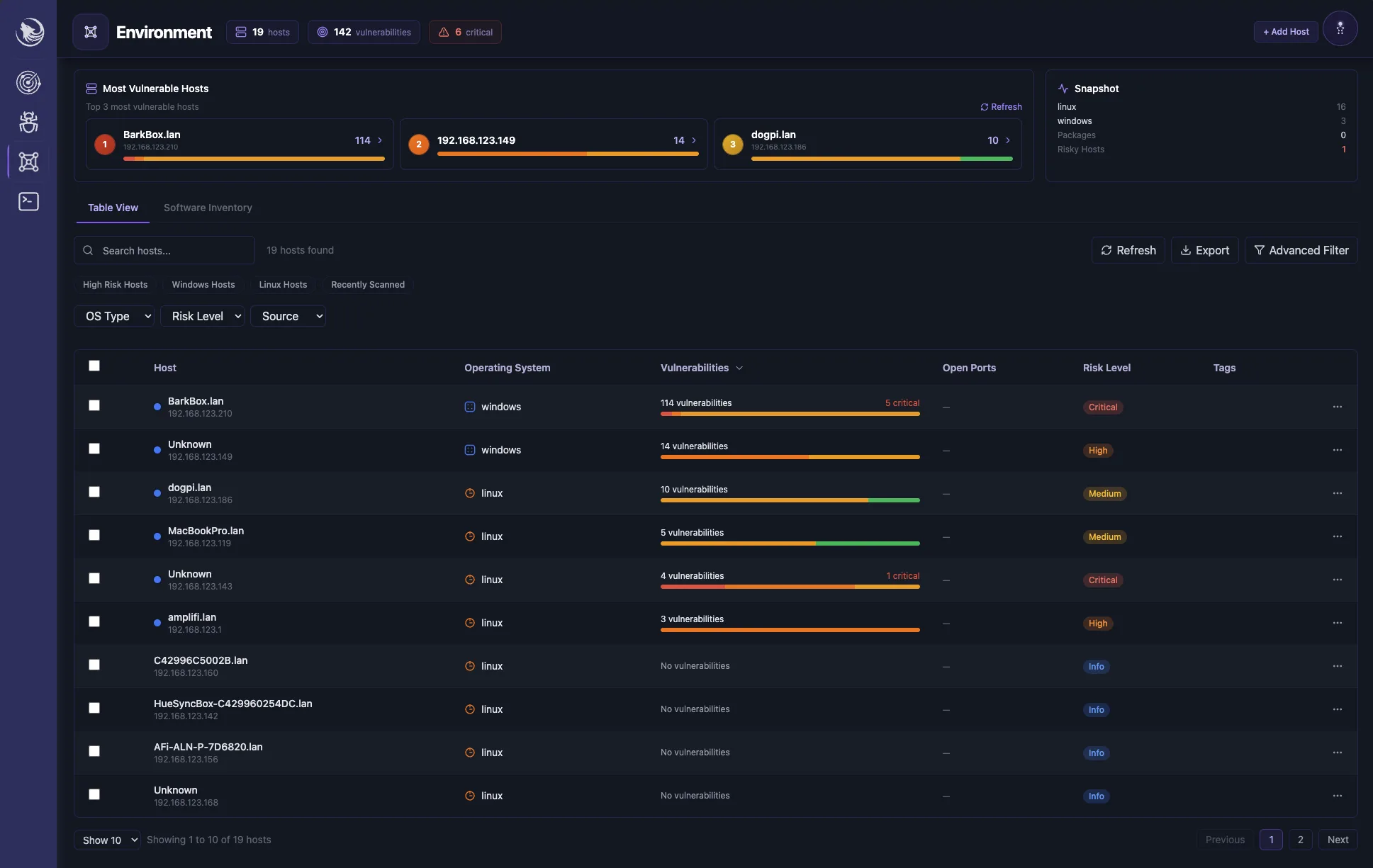
You cannot defend assets you cannot see, and point-in-time scans leave weeks of blindness between snapshots. Sirius unifies network scanning, host-based agent telemetry, and continuous discovery in one live environment view.
Nothing on your attack surface goes unseen, and new exposure surfaces the day it appears.
02 · Validate
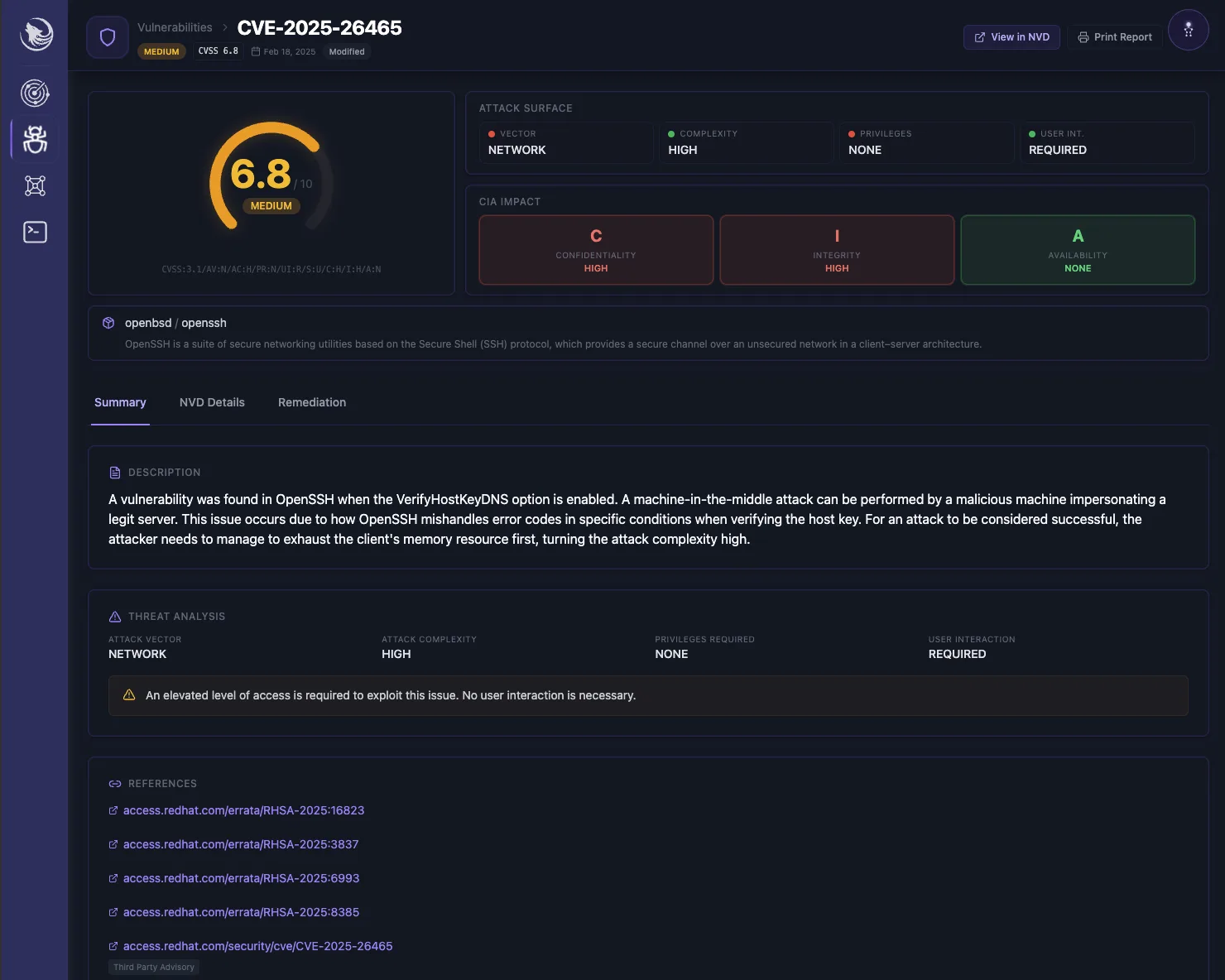
A CVE number and a score do not tell you whether a finding is exploitable in your environment. Every Sirius vulnerability carries attack-surface context (vector, complexity, privileges, CIA impact, and remediation guidance), ready for operator validation.
Decisions get made on evidence, not severity colors.
03 · See & Act
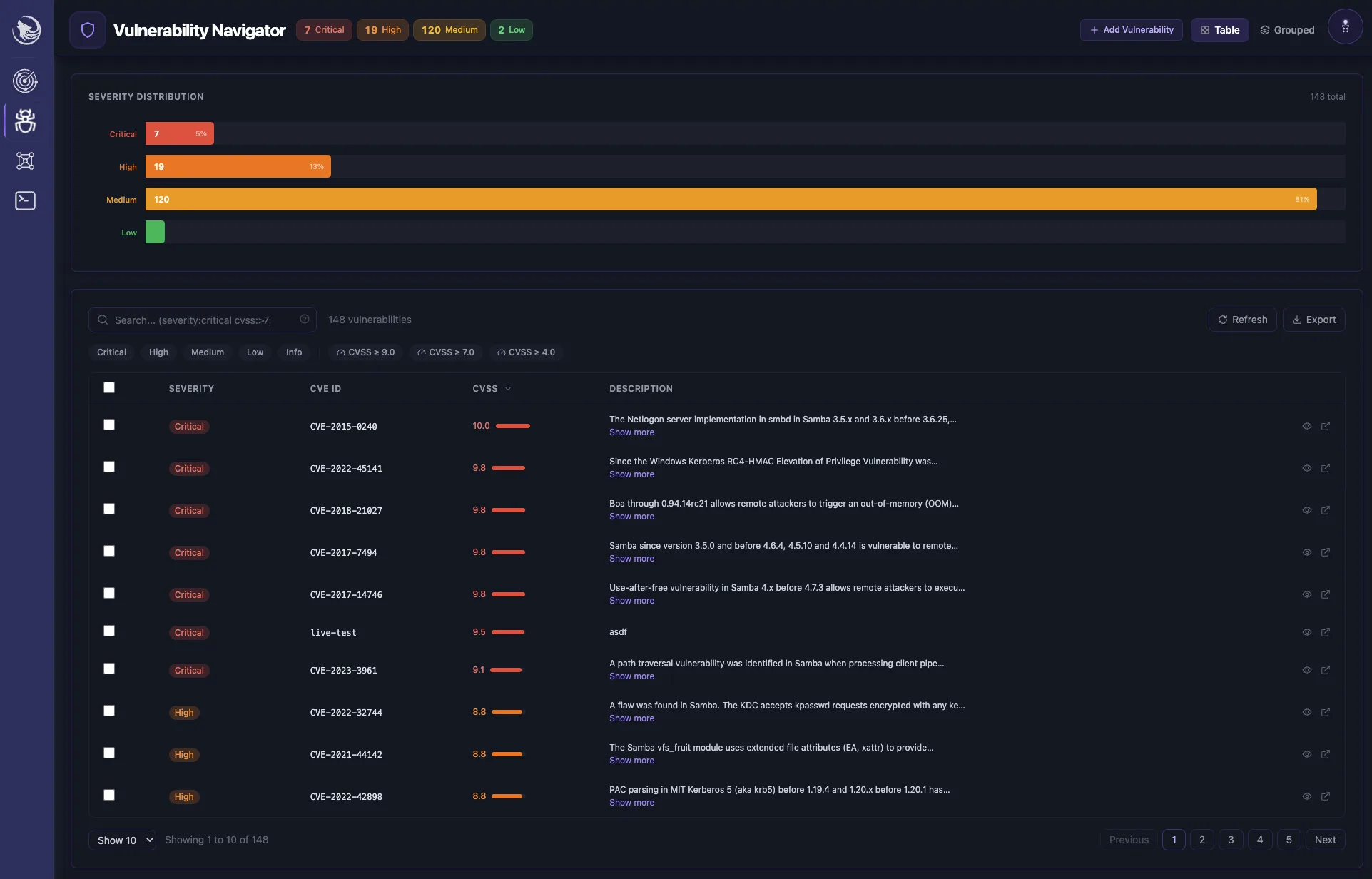
The Vulnerability Navigator gives operators severity distribution, CVSS-based filtering, grouped views, and fast triage, so the remediation queue shrinks to the work that actually reduces risk.
Your team stops burning hours on theoretical noise.
04 · Improve
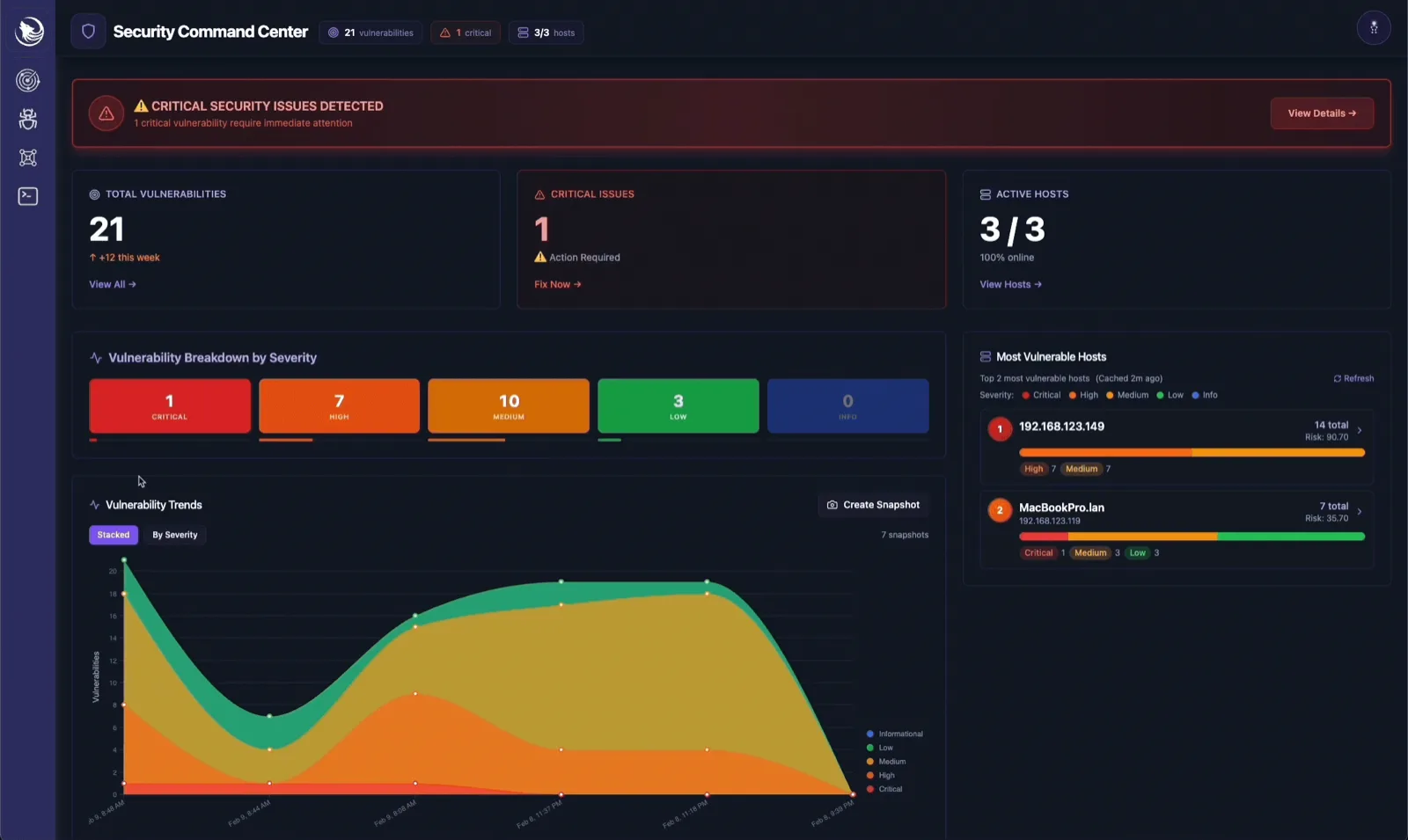
The Security Command Center turns live exposure into vulnerability trends, severity breakdowns, and risk scoring that track posture over time, snapshot to snapshot, quarter to quarter.
Measurable exposure reduction you can take to the board.
Continuous visibility, in view
When you need it
Sirius is the lowest-friction way to start seeing your attack surface the way operators do, without buying the entire platform first.
Thousands of findings, no exploitability context, and a team that spends more time exporting CSVs than reducing risk.
You do not need more findings. You need better decisions.
Point-in-time snapshots go stale the day after they run. New hosts, ports, and packages appear in the gap.
See exposure the day it appears, not at the next quarterly scan.
A raw export is not a risk story. Boards need exposure trending, not a longer list.
Walk in with proof, not another spreadsheet.
Triage, investigation, and remediation live in different tools, so the people doing the work lose hours to swivel-chairing.
One operator-first interface. Built by people who use it.
The difference
Mainstream scanners were built for auditors. Sirius was built for the people running them every day.
In the hands of an operator, the right tool changes everything.
Prioritize by context and workflow, not another severity color.
Traditional scanner
Sirius
Human in the loop
Sirius automates discovery, inventory, and ranking so operators spend time on judgment: which findings matter, which to fund, and which to defer. The tool does not replace the operator. It was built by them.
Technology creates leverage. Operators create confidence.
Sirius
Open Security operators
Decisions you can defend
Operator-built
Sirius was not designed by a product committee. It was built by the practitioners running Open Security engagements every day: people with military cyber backgrounds who teach at Black Hat and live in these workflows. When the mainstream tools would not keep up, they built the one that does, and it now powers every engagement we run.
Built for the engineer doing the work, not a product committee’s idea of a scanner.
Live agent operations and command execution, not a read-only portal.
Free to run anywhere, hardened and extended by working operators.
The same interface that powers Open Security assessments every day.
Built by practitioners who teach at Black Hat and live in these workflows.
The community scanner is the foundation the managed tier extends.
Close the loop
Sirius keeps the attack surface current so validation, remediation, and readiness have something true to work from. What you find here becomes more powerful when Aludra proves it and Portal tracks the fix.
How you engage
Open-source Sirius is the operator-first scanner you can run anywhere. Sirius Pro is the same core, delivered as a managed program: continuous scanning, AI-assisted analysis, and Active Directory auditing at client scale.
Clone it, run it, and see the operator-first foundation. Free to run anywhere, hardened by the people who use it on engagements.
Get Sirius ScanContinuous scanning, configuration and supply-chain findings, AI-assisted analysis, and Active Directory auditing, operated by our team.
Explore Sirius ProThe Open Security Experience
Start with the open-source scanner, or talk to an operator about Sirius Pro: managed continuous scanning with AI-assisted analysis and findings that go beyond the CVE checklist.