

Security Validation

Manufacturing Operations Penetration Testing

Safeguard critical manufacturing systems and infrastructure from cyber threats — without halting production.

Modern industrial systems and operational interconnections in a controlled plant environment

The Open Security Experience

Where this service sits.

Discover → Validate → See & Act → Improve. This engagement lights the stages that match how Open Security delivers it — and stays connected to the rest of the experience.

  1. 01DiscoverSee where risk lives.
  2. 02ValidateProve what actually works.
  3. 03See & ActPrioritize and close it.
  4. 04ImproveGet stronger next cycle.

The problem

IT testing assumptions break on the plant floor.

OT environments cannot tolerate the blunt scanning and exploitation tactics generic vendors bring. Untested IT-to-OT paths, legacy PLCs, and vendor remote access are exactly where adversaries enter.

  • A production outage is the one finding you cannot afford to discover live.

  • Vendor remote access and flat segmentation look like “IT issues” until they reach a PLC.

  • Generic test plans ignore maintenance windows, safety systems, and who can actually approve a change.

The path

  1. 01Corporate IT
  2. 02Vendor remote access
  3. 03OT network
  4. 04Production impact

The path into the plant is rarely on the plant floor. It starts where IT already trusts someone.
How the engagement is run

The work, from context to follow-through.

Operators run the engagement. You stay in the decisions that shape scope, evidence, and what gets closed.

What's in scope

  • IT/OT network segmentation validation
  • MES and PLC exposure paths
  • Vendor remote-access review
  • Safety-system impact analysis in test planning

The relationship

A program, not a point-in-time PDF.

A one-time plant test is not a production-security program. Remediation, retesting, and readiness stay tied to the windows you can actually use — and to operators who already know the floor.

  1. 01

    Plant context stays with the team: windows, safety constraints, and which paths were already proven.

  2. 02

    Retest is planned for the next maintenance period, not hoped for in an emergency.

  3. 03

    Exposure can remain visible between tests so segmentation gaps do not go quiet after the readout.

The Open Security difference

Production-safe by design.

  1. 01

    Passive and low-impact test phases planned with plant leadership around maintenance windows.

  2. 02

    Operators who understand MES, PLC, and segmentation realities — not just corporate IT.

  3. 03

    Safety-system impact analysis built into test planning before a single packet is sent.

Outcomes

What is different when you leave.

  1. 01

    An OT-specific risk register with production impact notes

  2. 02

    A segmentation and access-control hardening plan

  3. 03

    Vendor remote-access exposure mapped and prioritized

  4. 04

    A maintenance-window retest playbook your team owns

Related technology

Operators do the work. Technology keeps it connected.

Sirius

How Sirius keeps plant exposure visible

Sirius gives plant and security leadership a shared view of OT exposure — so segmentation gaps and legacy system risk stay visible long after the engagement ends.

Explore Sirius →
Sirius environment view used to map industrial and plant-network exposure

Aludra

How Aludra supports production-safe validation

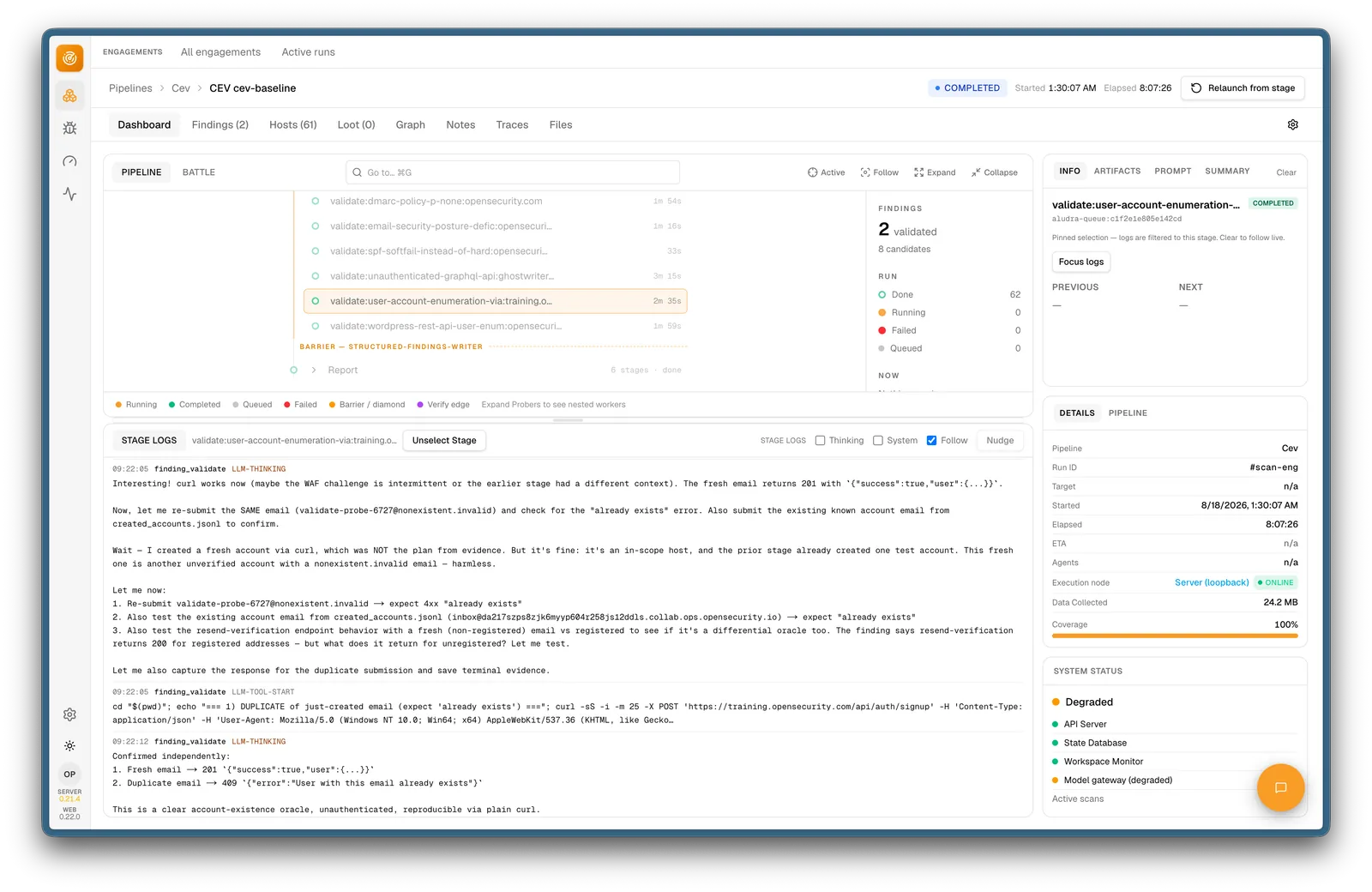
Operators use Aludra to extend discovery and validation without turning the plant into a lab. Proven paths still go through human review before they become findings.

Explore Aludra →
Aludra pipeline used to validate paths without treating the plant like a corporate LAN

Common questions

Can you test without stopping lines?

Yes. We design passive and low-impact phases with plant leadership and stay inside agreed maintenance windows.

Do your operators understand OT, or only corporate IT?

The team plans around MES, PLC, segmentation, and safety-system impact — not a copy of an office-network test.

What if a finding would be dangerous to exploit live?

We stop at proof that does not put production at risk, document the path, and save intrusive validation for a controlled window.

Will vendors and remote access be in scope?

Vendor remote access is one of the most common IT-to-OT paths. We include it when it is part of how the plant actually runs.

How do results stay useful after the engagement?

The risk register and retest playbook are written for the next maintenance window. Exposure can also stay visible in Sirius so gaps do not go stale.

The Open Security Experience

What comes before and after.

You do not need to buy the entire platform. These stages show how this service becomes more powerful as part of the Open Security Experience.

Prove the IT-to-OT path — on your timeline.

Talk with an operator about maintenance windows, safety constraints, and the paths worth testing before someone else finds them.